
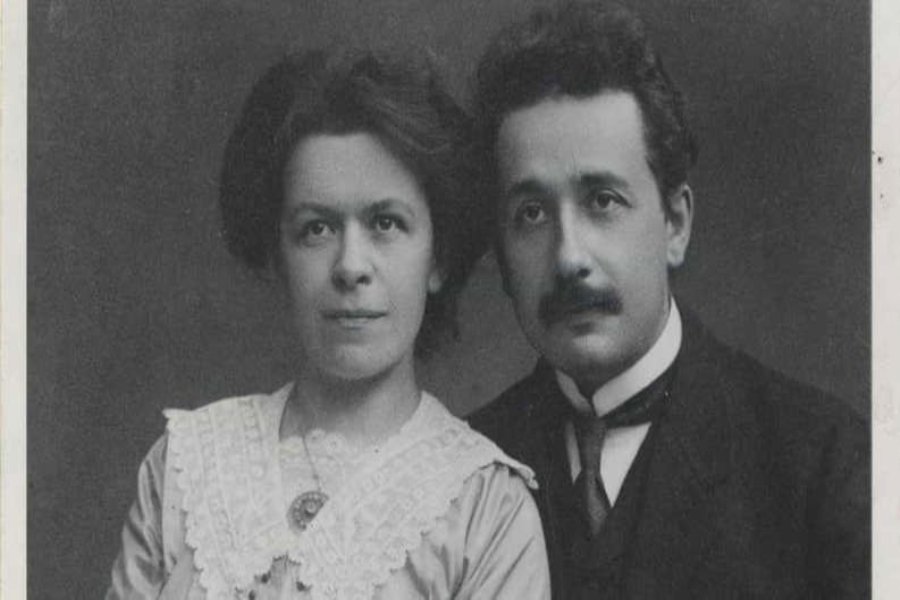
One of the most brilliant minds ever is Albert Einstein. Einstein is a well-known disruptor in the field of physics, and his personal life has also been marked by disruptions, particularly through his marriages. His wife has been an enormous influence in both his life and his scientific pursuit. In this article, we take a look at the two important women in Albert Einstein’s life: his wife Mileva Marić and his second wife Elsa Einstein.
Albert Einstein’s First Wife
Albert Einstein’s first wife was Mileva Marić. They were students in the late 1890s at the Polytechnic Institute in Zurich, Switzerland, when they met. Mileva was a clever student and one of the few women at the university when she was there. She was from Serbia, and extremely smart, very interested (partial toward) in mathematics, what is physics too much male field of interest.
Mileva and Albert developed a close relationship, which eventually evolved into an affair. They and married in 1903, which appeared to be a happy union, with their common interests in reading and literature. Some scholars go so far as to speculate that Mileva may have had a role in developing some of Einstein’s early thinking, particularly his ideas about relativity. But their relationship wasn’t very good.
The Trials of Albert Einstein and Mileva Marić’s Marriage
Mileva and Albert had a rocky marriage, both personally and professionally. This preoccupation with science took a toll on his personal life, as Albert had dedicated nearly everything to his work. Mileva, meanwhile, was grappling with reconciling her own career dreams with her duties as a wife and mother. The couple had two sons, Hans Albert and Eduard, but their marriage broke down under the strains of their personal lives.
The couple’s relationship had become somewhat strained by 1914, exacerbated in part by the heavy workload of Albert and Mileva’s personal frustrations with their children. They divorced in 1914, and their divorce was completed in 1919. After the divorce, Mileva supported their children on her own, with great economic hardship. Einstein, for his part, continued to provide financial support for Mileva and their children.
Albert Einstein’s Second Wife
Albert Einstein married his cousin, Elsa Einstein, in 1919 after divorcing Mileva. Elsa was 14 years older, born in 1876, and she had been a presence in Einstein’s life for many years before they married. It was not a love match — Elsa was his father’s sister’s daughter and had known Albert for years.
Elsa was neither a submissive type of woman, not in the sense that could easily win over Albert, nor particularly supportive when it came to his work and fame. She was described as caring and attentive, and she assisted in the management of Einstein’s personal affairs. Throughout their marriage, Elsa would look after the house whilst emotionally supporting Albert as his career developed.
Elsa Einstein’s Influence on Albert Einstein
Elsa Einstein was not just a good wife, but an important part of Albert’s public life. She also took care of his increasingly crowded schedule, which would have occupied his time with the trivial if it was not for her intervention. Elsa was also heavily involved in Einstein’s public image, arranging interviews and appearances.
Elsa herself was not a scientist, but she helped to stabilize Einstein in his personal life. She was largely supportive of his career and so managed the domestic side of their relationship that Einstein was free to concentrate on his science. And the part Elsa played in Albert’s life couldn’t be underestimated as she helped him manage the pitfalls of his sudden celebrity.
Albert Einstein’s Private Struggles and His Wives
Einstein had his share of troubles in his private sphere, too, Ana you can say the same for both his wives. Albert’s career-driven nature also meant he lacked a satisfying family life, straining both of his marriages. Nevertheless, Mileva and Elsa continued to remain supportive of him in their own ways.
Mileva was the loving mother of their two children, even if they had a difficult marriage. Eduard, Albert’s second son, also had mental health problems and had caused his parents much worry. By contrast, Elsa stood constantly at Albert’s side while enjoying world fame. She looked after his health and ran into the household, so that he could concentrate on science.
The Death of Elsa Einstein
In 1936 Elsa Einstein died and Albert was grief-stricken. The failure of their marriage was married for 17 years, and Elsa had played a large part in his life during that time — was something Wolfinger could now only think about. Upon her death, Albert Einstein was haunted by his personal life and his wives´ impact on his path.
Conclusion
Albert Einstein Wife had a major impact on, not only on the success of Albert’s career but also in his personal life. He had a first wife, Mileva Marić, who was highly educated and contributed to his early work; marriage ended in divorce. His second wife, Elsa Einstein, was his rock and gave him the stability that he needed that allowed Albert to be a full time scientist. These two women together were going to be a huge factor in the life of Albert Einstein, both personally and professionally.
FAQs
Who was Albert Einstein’s first wife?
Albert Einstein’s first wife was Mileva Marić, a Serbian physicist whom he married in 1903.
Did Mileva Marić contribute to Albert Einstein’s work?
It is believed by some researchers that Mileva Marić may have contributed to Albert’s early scientific work, although the extent of her involvement is debated.
Who was Albert Einstein’s second wife?
Albert Einstein’s second wife was Elsa Einstein, his cousin, whom he married in 1919 after his divorce from Mileva Marić.
Did Albert Einstein have children with his first wife?
Yes, Albert Einstein and Mileva Marić had two sons: Hans Albert and Eduard Einstein.
How long were Albert and Elsa Einstein married?
Albert and Elsa Einstein were married for 17 years, from 1919 until Elsa’s death in 1936.
How did Albert Einstein’s personal life affect his marriages?
Albert Einstein’s intense focus on his work often put a strain on both of his marriages, as he was deeply involved in his scientific pursuits and sometimes neglected his personal relationships.