Strong legs make everyday movement easier and provide a foundation for an active lifestyle. Regular strength training helps maintain muscle function as you walk, climb stairs, or participate in sports. Choosing suitable exercise equipment also brings more focus to your workouts, especially when you want to develop specific muscles. Each machine serves a different purpose, so understanding its role helps you make informed decisions about your fitness routine.
Leg Press Machine
Building lower-body strength often starts with exercises that engage several large muscle groups at once. The leg press machine serves this purpose, placing particular emphasis on the quadriceps and hamstrings. Its supported position appeals to gym members who prefer guided resistance exercises instead of traditional barbell squats. Adjustable weight settings also make the machine suitable for different stages of strength development. Stronger leg muscles support movements such as rising from a chair or walking uphill. For people working toward greater lower-body strength, the leg press provides a valuable option for training the thighs and hips.
Leg Extension Machine
Targeting the quadriceps requires a different approach from training the entire lower body. Located at the front of the thighs, these muscles help straighten the knees during everyday movement. The leg extension machine isolates this area, giving users a focused way to develop thigh strength. Its specialized function also makes it a useful complement to compound exercises that distribute effort across several muscle groups. Balanced quadriceps development supports knee movement and contributes to overall lower-body performance. Including this machine in a strength program gives the front of the thighs dedicated attention.
Leg Curl Machine
While the quadriceps receive plenty of attention during many leg workouts, the muscles along the backs of the thighs deserve equal consideration. Hamstrings contribute to knee flexion and hip movement, making them important for walking and running activities. The leg curl machine targets these muscles directly, helping address an area that other exercises might not emphasize as strongly.
Seated and lying models offer different configurations to suit gym layouts and individual preferences. Developing the hamstrings alongside the quadriceps encourages more balanced muscle strength. This makes the leg curl machine a worthwhile addition to lower-body training.
Hack Squat Machine
Squat variations remain a staple of leg training because they challenge the muscles responsible for supporting body movement. A hack squat machine offers a guided alternative, with a supported backrest helping users maintain a stable position throughout the exercise. Quadriceps and glutes perform much of the work, while other lower-body muscles contribute to the movement. This equipment appeals to people focused on developing thigh strength without relying exclusively on free weights.
Its resistance system also supports progressive strength training as fitness levels improve. The hack squat brings another dimension to leg workouts centered on muscle development.
Calf Raise Machine
Thigh exercises often dominate leg day, leaving the lower legs with less attention. The calf raise machine addresses this gap through targeted training for the soleus and gastrocnemius muscles. These muscles help lift the heels and contribute to movements that require pushing off the ground. Calf strength also supports ankle function during walking and running. Standing and seated versions emphasize the calf muscles differently, giving fitness facilities options for varied training needs. Dedicated calf training helps create a more complete lower-body routine.
Vertical Leg Raise/Dip
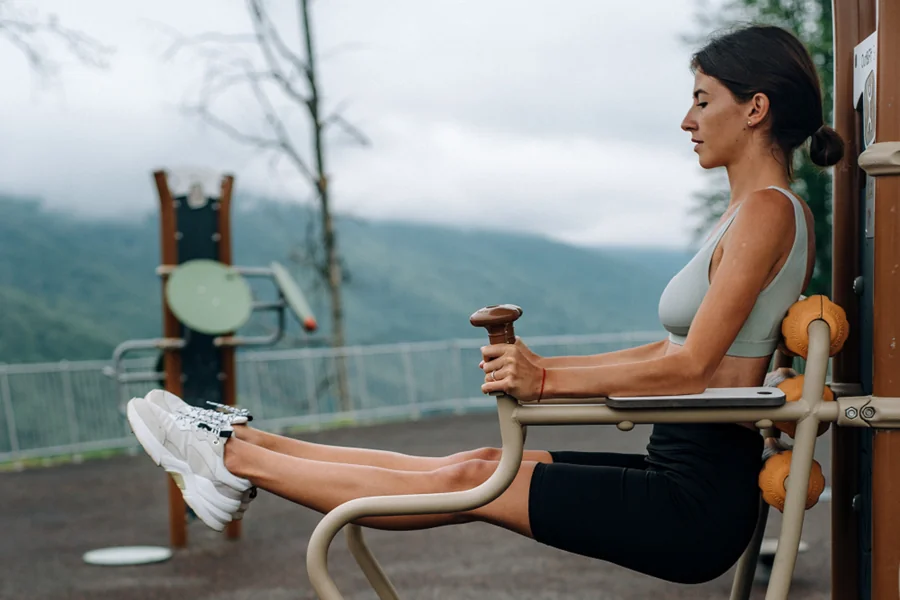
Not every station in a gym focuses exclusively on the legs. A vertical leg raise/dip station primarily supports core and upper-body exercises, making it a useful complement to lower-body strength training. Vertical leg raises engage the abdominal muscles and hip flexors, which contribute to trunk control and movement.
Core stability also plays an important role in maintaining balance during many exercises involving the legs. Many fitness equipment providers, including CSM Fitness USA, offer equipment options for fitness facilities serving different training needs. Including this station in a gym creates space for core-focused exercises alongside dedicated leg training equipment.
Resistance Bands
Leg training does not always require large machines or a fully equipped gym. Resistance bands provide a compact alternative for exercises that emphasize the glutes and hips. Their elastic tension adds resistance to familiar movements, giving workouts an extra challenge without bulky equipment.
Different resistance levels also accommodate changing strength and fitness goals. For people exercising at home, bands offer a convenient way to supplement bodyweight training. Their versatility makes them a practical option for maintaining variety in a lower-body fitness routine.
Stationary Exercise Bike
Strength is only one part of lower-body fitness. Muscular endurance and cardiovascular health also influence how comfortably people manage physical activity. A stationary exercise bike supports these goals through continuous pedaling that engages the quadriceps, hamstrings, glutes, and calves. Adjustable resistance gives users control over workout intensity, from gentle cycling to more demanding sessions. Its low-impact nature also makes cycling an appealing choice for people seeking cardiovascular exercise without repeated pounding on the joints. The bike adds an endurance-focused element to a strength-training program.
Right Equipment for Stronger Legs
Effective leg training starts with equipment that serves a clear purpose. A leg press develops overall lower-body strength, while specialized machines give individual muscle groups more attention. Other options support core conditioning or cardiovascular fitness, creating opportunities to build a more balanced exercise routine. Consider your training priorities and available facilities when selecting equipment. Consistent workouts and adequate recovery help support steady progress toward stronger legs.